Thailand is hot year-round, but northern Kyushu, where Fukuoka sits, has four distinct seasons — spring, summer, autumn, and winter. Even on the same course, a round in April meets completely different weather from one in August or December. What you need to pack depends on when you go, so check the season-by-season weather and what to wear in advance.
Fukuoka's four seasons — at a glance
Fukuoka (including the Asakura area) has a warm, humid climate with an annual average temperature of about 17°C. Even in winter it rarely drops below freezing and snow is scarce, but midsummer brings sustained heat well above 30°C.
🌸 Spring (Mar–May)
Pleasant weather with daytime highs of 15–23°C. The cherry blossoms and fresh greenery are beautiful, making it the best season for golf. Mornings and evenings are still cool.
☀️ Summer (Jun–Aug)
Highs of 30–33°C with very high humidity. Mid-June to mid-July is the rainy season; August–September is typhoon season. You'll need to prepare for heat and sudden showers.
🍂 Autumn (Sep–Nov)
Once the September typhoons pass, October–November brings clear weather around 23°C. With the leaves turning color, it's the prime golf season. It gets chilly from late November.
❄️ Winter (Dec–Feb)
Daytime around 10°C, mornings and evenings a chilly 3–6°C. With little snow or rain, rounds are possible, but for Thai golfers, preparing for the cold is essential.
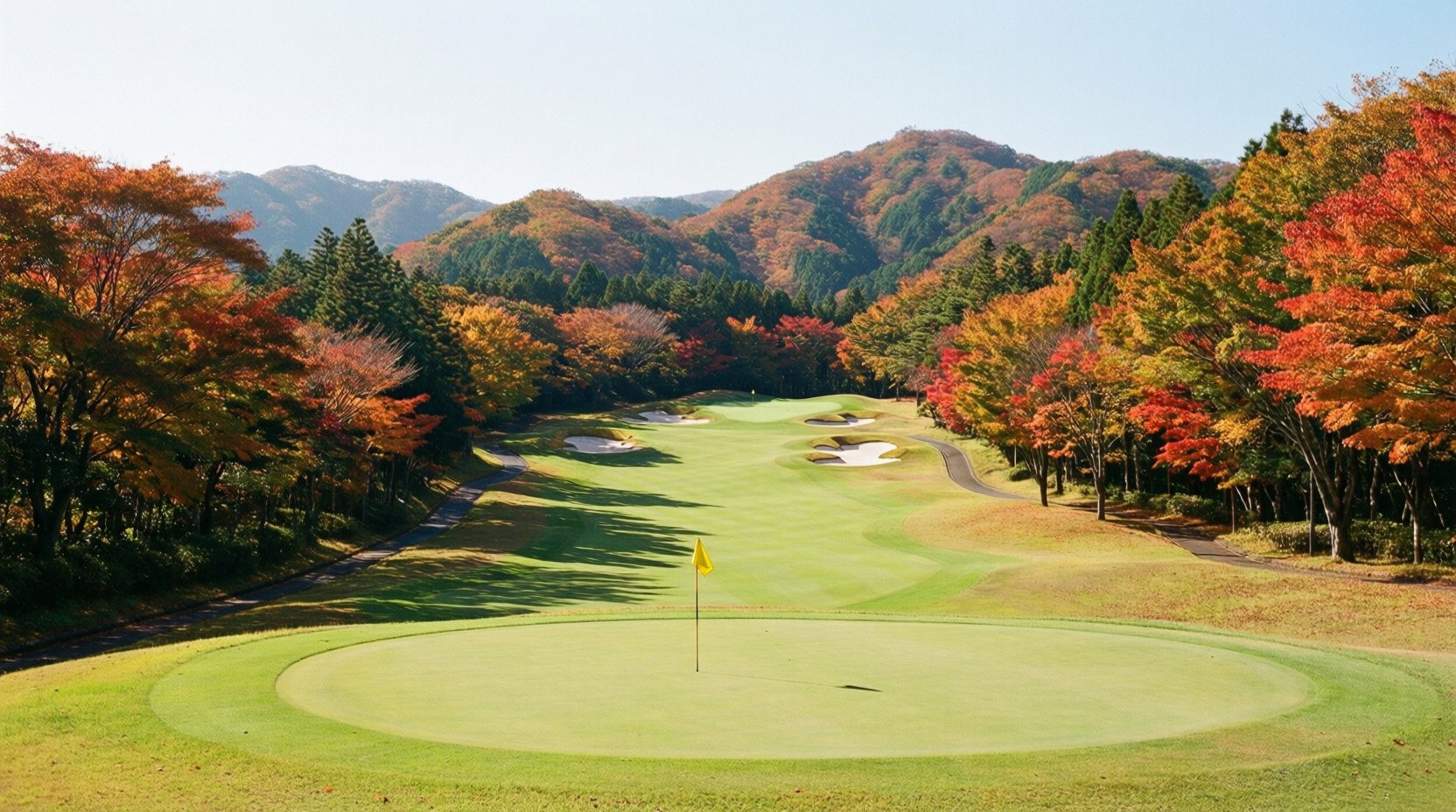
When is the best time for a round of golf?
Looking purely at the weather, the ideal times for golf in Fukuoka are clear. Spring (April–early June) and autumn (late September–November) offer mild temperatures and little rain, making for the most comfortable rounds. Conversely, midsummer and midwinter call for caution.
Best: April–early June, late September–November (mild and clear)
Caution: mid-June–mid-July (rainy season), July–August (heat and humidity), August–September (typhoons), December–February (cold)
Rounds are possible even in midsummer and midwinter, but you'll need to prepare thoroughly for the heat or cold.
Monthly temperature and rainfall trends
Below are rough monthly temperature and rainfall trends for Fukuoka. There's year-to-year variation, so treat these as reference ranges.
| Jan–Feb (winter) | High 10–12°C / Low 3–5°C · little rain · cold but playable |
|---|---|
| March (early spring) | High 14–16°C / Low 5–7°C · moderate rain · chilly mornings |
| Apr–May (spring) | High 19–25°C / Low 10–16°C · moderate rain · best season |
| June (early summer / rainy season) | High 26–28°C / Low 19–21°C · heavy rain · rainy season from mid-month |
| July (rainy season / midsummer) | High 30–33°C / Low 24–26°C · most rain · hot and humid |
| August (heat) | High 32–34°C / Low 25–27°C · heavy rain · watch for heat and typhoons |
| September (early autumn / typhoons) | High 28–30°C / Low 22–24°C · heavy rain · typhoon season |
| Oct–Nov (autumn) | High 18–24°C / Low 9–16°C · little rain · best season |
| December (early winter) | High 12–14°C / Low 5–7°C · little rain · chilly |
Seasonal clothing — what to pack
The golf-wear basics (shirt, trousers, golf shoes, cap) are the same in any season. Here's what to add or leave out depending on the time of year.
🌸 Spring / Autumn (Apr–early Jun, Sep–Nov)
Short sleeves are fine in the daytime, but mornings and evenings are cool. Be sure to pack a light windbreaker or a long-sleeve layer in your golf bag. Go thicker in late November.
☀️ Summer (mid-June–Sep)
Breathable performance fabrics, a wide-brimmed hat, sun protection (sunscreen, arm sleeves, sunglasses), and spare shirts. A change of clothes for sweat and sudden showers is also useful.
❄️ Winter (Dec–Feb)
Cold protection is key. Thermal performance base layers, a windstopper (windproof, insulated) jacket, gloves, a neck warmer, and heat packs. These are hard to find in Thailand, so prepare them before you leave.
🌧️ Rain readiness (year-round)
For the rainy season, typhoons, and showers, it's good to pack waterproof rainwear and an umbrella, spare socks, and waterproof shoe covers. Don't forget a rain cover for your golf bag.
In Bangkok and Chiang Mai you wear short sleeves all year, so it's easy to underestimate Fukuoka's cool mornings and evenings and its winter cold. Even in spring and autumn it's chilly at tee-off time (early morning), so pack a light outer layer regardless of season. For a winter trip, preparing your cold-weather gear before leaving Thailand is the surest bet.
Rainy season, typhoons, UV — know in advance
Rainy season: In northern Kyushu it usually begins in early-to-mid June and lasts until mid-July. July is the wettest month in Fukuoka, with frequent short, intense downpours.
Typhoons: These mainly approach in August–September, peaking in September. Strong winds and heavy rain can affect flights and rounds, so check the forecast more often if traveling during this period.
At midday in July–August, UV is very strong and humidity is high, making it feel intensely hot. Schedule an early-morning tee time, and prevent heat illness with hydration, sunscreen, and rest in the shade.
How to check the weather
Fukuoka's weather varies greatly by season and by date. We recommend checking the forecast twice — before departure and on the morning of your round.
- Check the Fukuoka / Asakura forecast with Japan's leading weather apps, tenki.jp or Yahoo! 天気 (Yahoo Weather) (see Chapter 3, "Useful apps")
- During the rainy season and typhoon period, also check hourly precipitation probability and wind speed
- Golf courses have different rules for play in the rain — confirm the criteria for suspension and refunds in heavy rain or thunderstorms with your local guide or the clubhouse in advance
- During typhoon warnings, also check the possibility of flight changes
The temperatures, rainfall, and rainy-season/typhoon periods above are rough trends based on long-term averages, and the climate differs year to year. We recommend confirming the actual weather once more with the latest forecast just before you leave.