Japan is one of the safest travel destinations in the world. Still, just in case — getting hurt, falling ill, or losing your passport can happen to anyone. This chapter lays out, at a glance, what to do, where to go, and how, calmly, when that happens. We hope you'll never have to open it, but knowing it gives you peace of mind.
First of all — emergency phone numbers
You only need to memorize two emergency numbers in Japan: 110 (police) and 119 (fire / ambulance). They connect free of charge from any phone, even with no balance on your mobile.
| 110 | Police — crime, accidents, theft, loss, threats to your safety |
|---|---|
| 119 | Fire / ambulance — reporting a fire and requesting an ambulance. Call 119 when you're sick or injured |
| 118 | Maritime emergency (Japan Coast Guard) — sea and coastal accidents |
| 050-3816-2787 | Japan Visitor Hotline (JNTO) — 24/7, 365 days, traveler support in English, Korean, and Chinese |
Ambulances in Japan are free, but calling one for minor symptoms is not advised. The call connects in Japanese; say "救急です (kyūkyū desu — it's an emergency)," then if you need an interpreter, request "通訳をお願いします (tsūyaku o onegai shimasu)." Depending on the area, a three-way interpreter in English or another language is connected.
Emergency Japanese — play it or repeat after it
The more urgent it is, the harder words come. It's enough just to play the expressions below with the 🔊 button or to show the screen.
When you're sick — using hospitals and pharmacies
For minor symptoms, you can often resolve things at a pharmacy first. If you need more care, go to a hospital. Medical costs can be reimbursed through travel insurance, so be sure to keep your receipts.
Pharmacy (薬局 · drugstore)
Everyday medicines for colds, headaches, digestion, and pain relief can be bought at drugstores like Matsumoto Kiyoshi and Kokumin. Describe your symptoms and the clerk will help you pick a medicine.
Hospital (病院 · clinic)
Bring your passport and insurance certificate. After treatment, pay the full cost upfront, get a receipt and medical certificate, and claim it from your insurer after returning home.
In downtown Fukuoka there are hospitals that can treat you in English. The Japan Visitor Hotline (050-3816-2787) or JNTO's medical-facility search (Japan Hospital Guide) can direct you to the nearest foreign-language-capable hospital. If you ask the golf course or hotel front desk, they'll tell you the nearest hospital.
If you lose your passport
It's the most flustering situation, but the procedure is set. Just proceed calmly in the order of police report → Thai embassy → issuance of travel documents for your return.
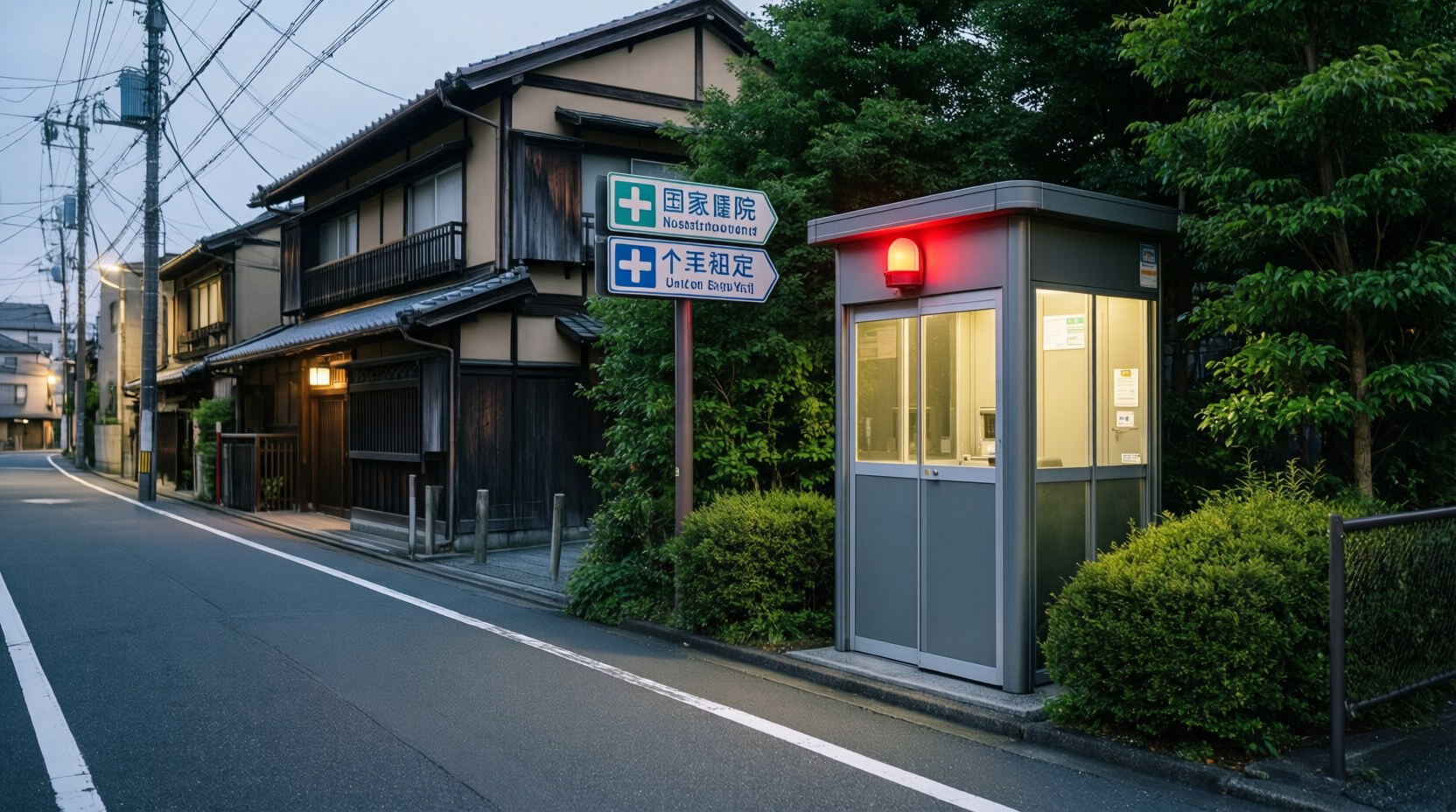
- ① Report the loss at the nearest police station or police box (koban)File a loss/theft report and obtain a report certificate (盗難・紛失届出証明書). This document is essential when the embassy reissues your passport.
- ② Contact the Royal Thai Embassy in Japan (Tokyo)There is no Thai embassy in Fukuoka, so contact the Tokyo embassy. They'll guide you through the procedure for a temporary travel document (C.I.) or emergency passport for your return.
- ③ Prepare photos, ID, and the report certificateApply with passport photos, identity-verification documents (a copy of your ID, a copy of your old passport, etc.), and the police report certificate. Saving a copy of your passport and a photo on your phone and email in advance is a great help.
- ④ Adjust your return flightDocument issuance can take a few days, so ask your airline about changing your schedule. Depending on your travel insurance, you may be reimbursed for extra accommodation and flight costs.
| Royal Thai Embassy in Japan (Tokyo) | 3-14-6 Kami-Osaki, Shinagawa-ku, Tokyo 141-0021 |
|---|---|
| Main phone | +81-3-5789-2433 / +81-3-5789-2428 |
| Emergency hotline | +81-90-4435-7812 (for emergencies such as a Thai national's death, serious injury, or serious illness) |
| Consular hours | Mon–Fri 09:00–12:00, 13:30–15:30 (closed on public holidays) |
| Nearest station | East exit of Meguro Station on the JR Yamanote Line / Tokyo Metro Namboku Line |
Take a photo of your passport's info page and save it to your phone and email, and screenshot your air tickets and booking confirmations too. If you lose them, identity verification and reissuance go much faster. If you're traveling with others, share copies of each other's passports as well.
Earthquakes, etc. — basic safety rules
Japan has frequent earthquakes, but buildings are well designed to be earthquake-resistant, so most pass without major shaking. If you feel shaking, act calmly in the following order.
- While it's shaking, get under a table and protect your head (don't panic and run outside)
- After the shaking stops, turn off gas and flames, and open a door to secure an exit
- Use the stairs instead of the elevator
- Follow the guidance of hotel and golf course staff, and move to the designated evacuation site (避難場所)
- Check for information via the Japan Meteorological Agency's Earthquake Early Warning (phone alert) and NHK broadcasts
Safety tips (with English support), a free safety-information app run by the Japanese government, alerts you to disaster warnings for earthquakes, typhoons, heavy rain, and more in a foreign language. We recommend installing it before departure. If a thunder/lightning warning sounds during your golf round, stop play immediately and take shelter in the clubhouse.
Travel insurance and lost items
Japan is a country where lost items are returned at a very high rate. Even if you lose something, don't give up — report it.
- Taxi · train · bus: Inquire at the lost-and-found center (忘れ物センター) of the company or station you used. Telling them the time and section of your ride makes it easier to find.
- Golf course · hotel · restaurant: Contact the front desk of the place you left it right away. They often hold onto it.
- Lost valuables · cash: File a lost-property report at a police station or police box. Since found items are collected by the police, there's a chance of recovery.
To be reimbursed for hospital costs, loss, theft, and the like, you absolutely need a police report certificate and hospital receipts and medical certificate. As a rule, get them on the spot. After returning home, they're difficult to obtain.
110 · 119, the Japan Visitor Hotline (050-3816-2787), and the Thai embassy number — save just these three on your phone and you can take that crucial first step in any situation.
Emergency contacts and procedures are subject to change. We recommend checking the Royal Thai Embassy in Japan website (site.thaiembassy.jp) and the terms of the travel insurance you purchased once more just before departure.