In Thailand, golf means a round with a caddie. They pick and hand you clubs, tell you the distances, tend the flagstick, even read your lines. But at many courses in Japan, "self-play" (セルフプレー) — handling everything yourself without a caddie — is the norm. It feels unfamiliar at first, but once you grasp the principle it becomes a free round played at your own pace. Learn Fukuoka Century Golf Club's self-play in advance and you'll feel relaxed from the very first hole.
Why is "self-play" so common in Japan?
Japan, too, once usually had one caddie per group. But as labor costs rose and the push to lower playing fees grew, today many courses run caddie-free self-play as the standard. It's also typically about 3,000 yen cheaper than playing with a caddie.
In return, the players share the tasks a caddie used to handle. It may sound hard, but Japanese courses are densely equipped with distance markers, cart navigation, and on-green guidance for self-play golfers. Trust the tools and follow along.
| With a caddie (Thai style) | The caddie assists with club selection, distance guidance, flagstick handling, line reading, even bunker raking |
|---|---|
| Self-play (Japanese style) | The player handles all of the above. You drive the cart yourself, too |
| Cart | Most have GPS navigation. Remaining distance, hole map, and next-hole guidance shown automatically |
| Pace assistance | Yardage markers on fairways and sprinklers, plus distance-to-green posts placed throughout |
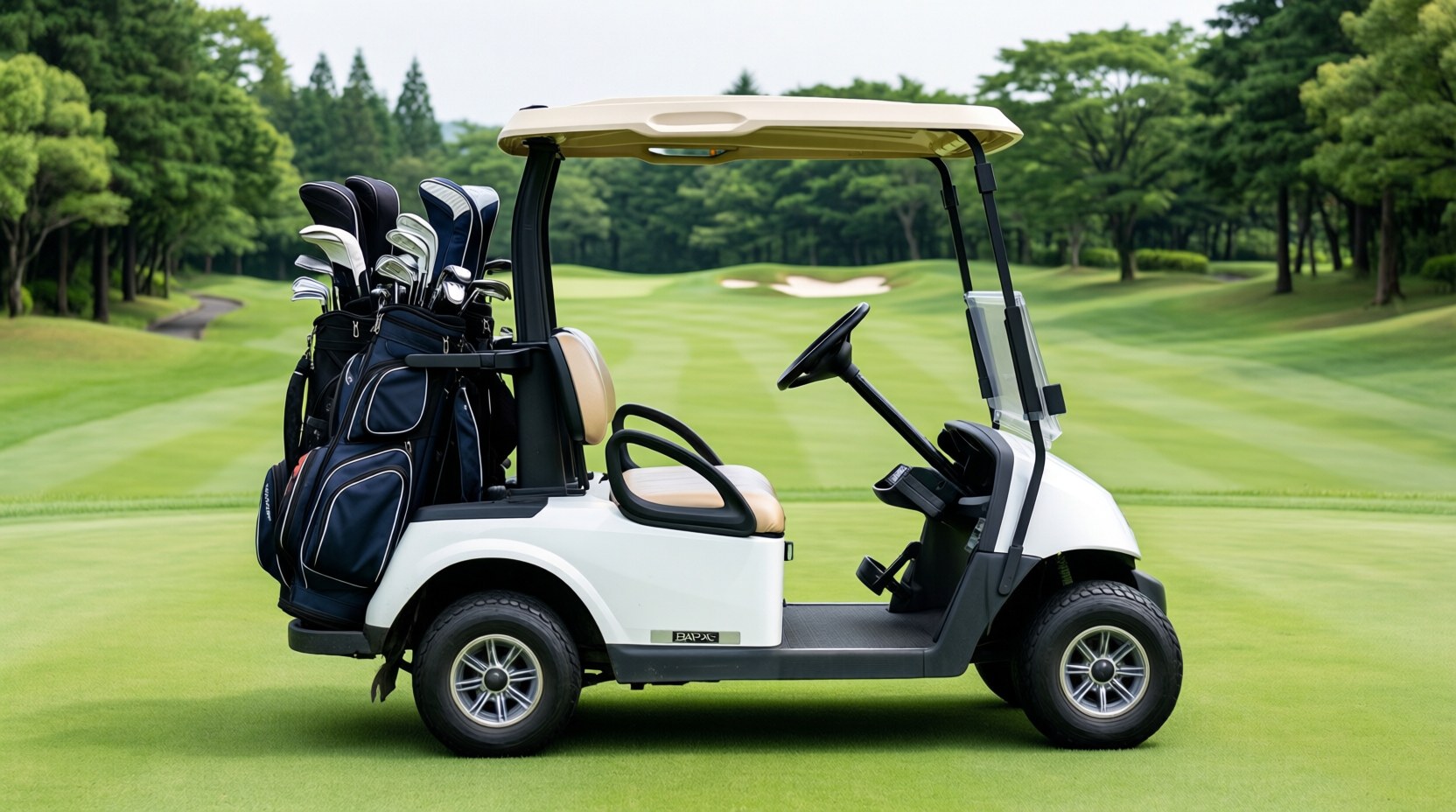
The 4 things you do yourself — in place of a caddie
① Club selection and judging distance
The job of a caddie telling you "It's a 7-iron" is now yours to do. But there's no need to estimate by eye.
- Cart navigation — the screen shows the remaining distance to the center of the green in yards. Park the cart near your ball and you can check the approximate distance right away.
- Fairway yardage markers — distances to the green are marked on sprinkler covers and small posts (usually meters or yards; check the course's signage).
- Rangefinder — Japanese courses are lenient about laser and GPS rangefinders. If you brought one, measuring the exact distance to the pin yourself is the most convenient.
② Flagstick (pin) handling is up to you
The person who pulls and replaces the flagstick on the green is also not a caddie but a member of your group. Whoever is nearest the hole, or whoever isn't putting next, naturally tends the flagstick. Under the current rules there's no penalty for putting with the flagstick left in, so when putting from far away you can leave it in. When you're done, replace the flagstick precisely in its hole.
③ You keep your own score
The score a caddie used to record is now yours to count. Many carts have a score-entry function in the navigation; if not, write it on a paper scorecard. It's good manners for group members to confirm each other's strokes (more on this in the next chapter).
④ Driving and moving the cart
In self-play, you drive the cart yourself, too. Fairway-entry rules (cart-path only / designated zones only, etc.) differ by course, so check the guidance before the first hole. On rainy days or during turf-protection periods, "cart-path only" signs appear frequently.
Japanese self-play is less "no caddie" and more "group members help each other." Small acts of cooperation — tending the flagstick, helping rake the bunker, confirming distances together — make the round more enjoyable.
The heart of self-play — leaving the course "as you found it"
In a caddie round, the caddie filled in divots and raked bunkers for you. In self-play, you do this yourself. It's the etiquette Japanese golfers value most, a consideration for the next group and the course. Just remember three things.
① Divots — fill with sand
If your shot tears up the turf, take sand from the seed-sand bucket (目土, mosand) stocked on the cart, fill the torn spot, and tamp it flat lightly with your foot.
② Bunkers — rake them smooth
After a bunker shot, always use the rake to smooth out your footprints and the spot you hit. When exiting, leave from the low-lipped side rather than where you entered to cause less damage.
③ Greens — repair ball marks
For a mark left where your ball landed on the green (pitch mark), use a green fork to draw the edges inward and press it lightly with your foot.
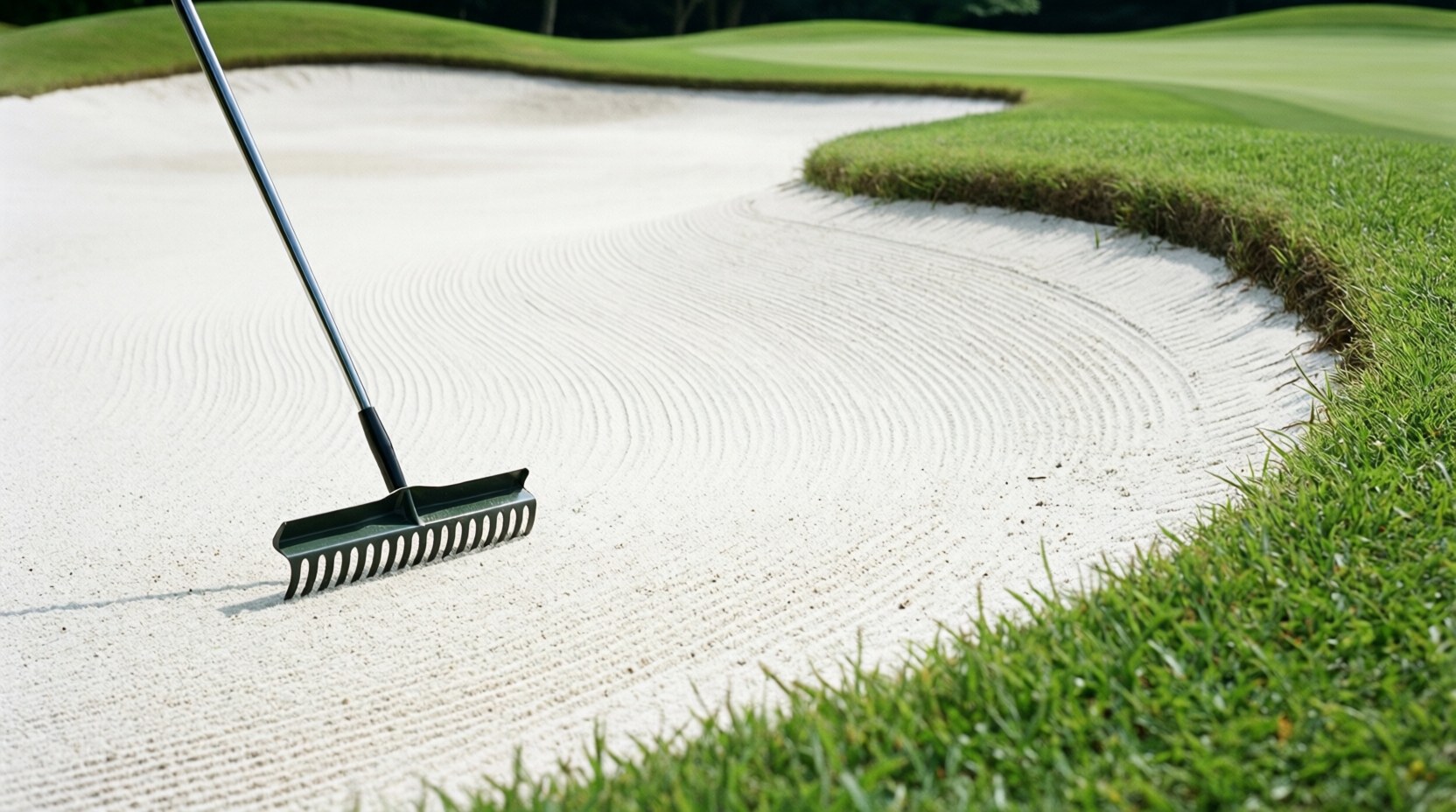
Under Japanese (and international) rules, touching the sand with your club before making your shot in a bunker is a 2-stroke penalty. If you have a habit of lightly grounding your club in the sand at address, be careful. The rake for tidying up is used "only after the shot."
Self-play etiquette checklist
- Fill divots with sand (mosand) and tamp them down with your foot
- After a bunker shot, smooth your footprints and the spot you hit with the rake
- In a bunker, don't touch the sand with your club until you hit (2-stroke penalty)
- Repair ball marks (pitch marks) on the green immediately with a green fork
- On the green, don't step on your playing partners' putting lines
- If you pull the flagstick, replace it precisely in its hole after the putt
- Return shared tools like rakes and seed-sand buckets to their place
- Check and follow cart-entry signs (path-only, etc.)
On the course there are master's room (マスター室) staff who manage pace, and marshals who patrol the course. If you're unsure about cart operation, yardage markers, or the location of the next hole, just raise your hand and ask. When you don't know, asking is the fastest and most courteous way.
The detailed rules of self-play (cart entry, distance units, locations of seed sand and rakes) can vary by course and season. Check the master's room or the cart's notice once more before teeing off on the first hole.