In the evening after your round, Fukuoka won't let a golfer down. A bowl of rich tonkotsu ramen, a bubbling pot of motsunabe, the glow of food stalls lined up along the river — Fukuoka is one of Japan's foremost "foodie cities." This chapter pulls together everything from around the golf course (Asakura) to downtown Hakata and Tenjin: what to eat and where, and how to order and pay at a Japanese restaurant without getting flustered.
A foodie map at a glance — centered on Century GC
With Asakura (朝倉), where Century Golf Club sits, at the center, we've placed the recommended restaurants by direction and sense of distance. The nearby ① and ② are great for the evening of your round day, while the downtown-direction ③–⑥ are best when you set aside a day in your itinerary.
Recommended restaurants — distance · signature dish at a glance
From the nearest spots to downtown specialty restaurants. The distance and driving time on each card are approximate, measured from Century GC.
🍛 Clubhouse restaurant
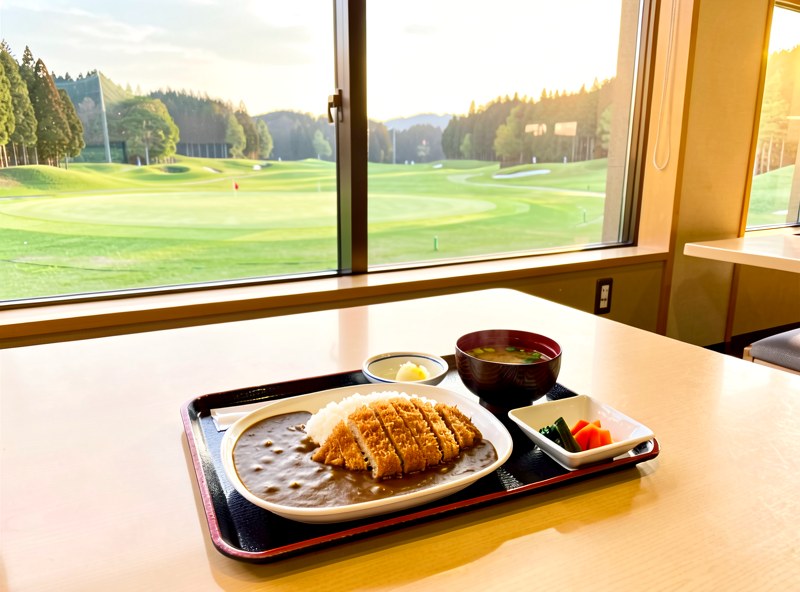
Distance On the course · 0 min walk
Signature dishes Katsu curry, set meal (teishoku), udon
The easiest choice right after your round. Safe Japanese home-style fare like curry, pork cutlet, and udon — often with photo or English menus.
🍲 Asakura · Amagi local udon
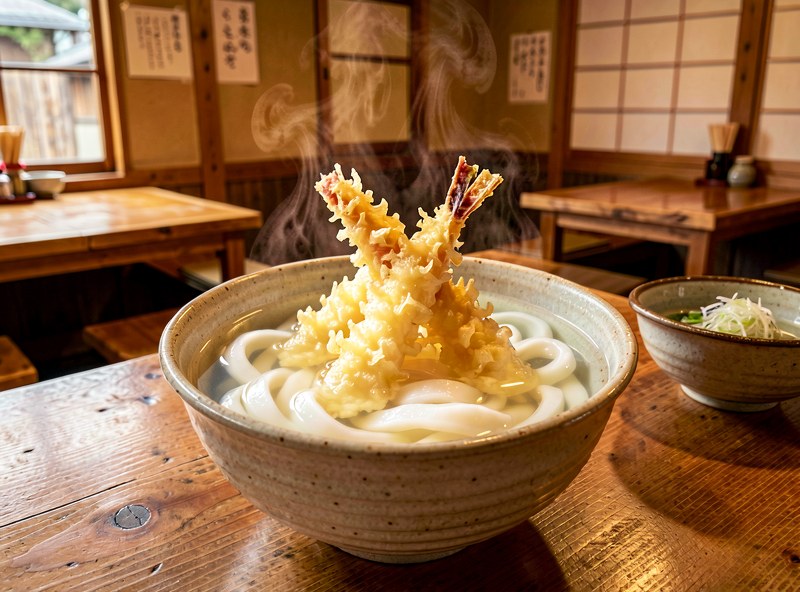
Distance Asakura/Amagi town · 10–20 min by car
Signature dishes Gobo-ten udon, set meals
These are neighborhood eateries, not tourist spots, so the menu may be Japanese-only. Fukuoka-style udon with soft noodles topped with burdock-root tempura is comforting. Point at a photo or use a translation app.
🍜 Hakata Station "Ramen Street"
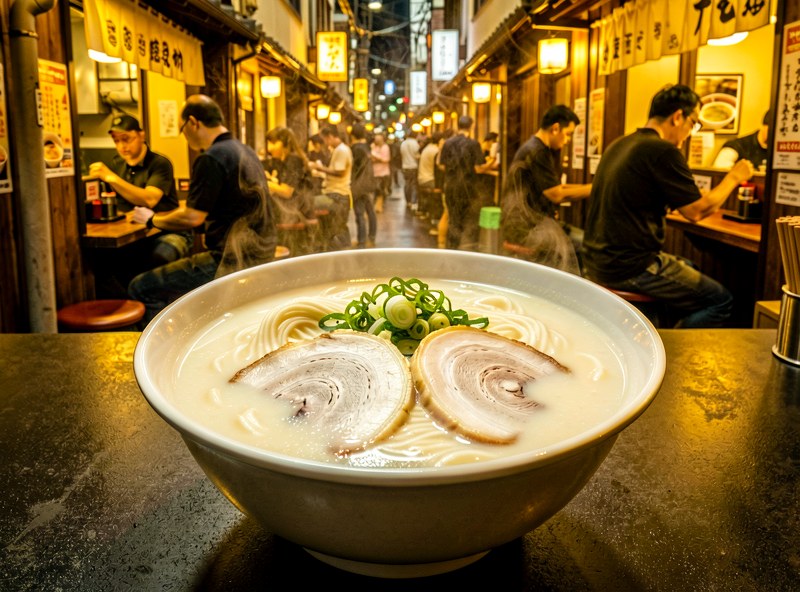
Distance Hakata Station (JR Hakata City) · about 50 min by car
Signature dishes Hakata tonkotsu ramen, kaedama (noodle refill)
The "Hakata Mengaido (Ramen Street)" inside the station building gathers popular ramen shops, so it's convenient even on rainy days. Milky-white tonkotsu broth with thin noodles is the standard.
🏮 Nakasu yatai (food stalls)
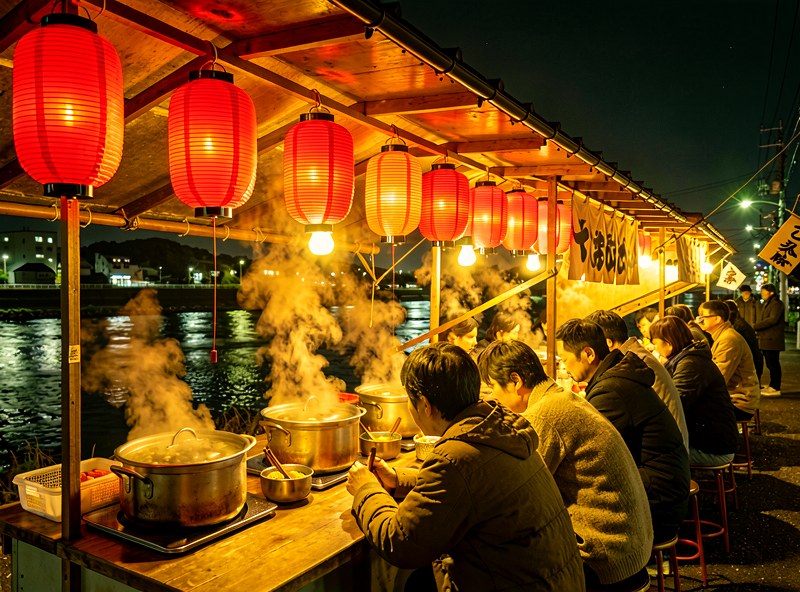
Distance Nakasu (中洲) riverside · about 55 min by car
Signature dishes Ramen, oden, grilled skewers (yakitori)
Open-air food stalls lined along the river. Enjoyed shoulder to shoulder, it's Fukuoka's finest night scene. Typically open from around 6 PM to late at night; many take cash only and seating is tight.
🍲 Tenjin motsunabe (offal hot pot)
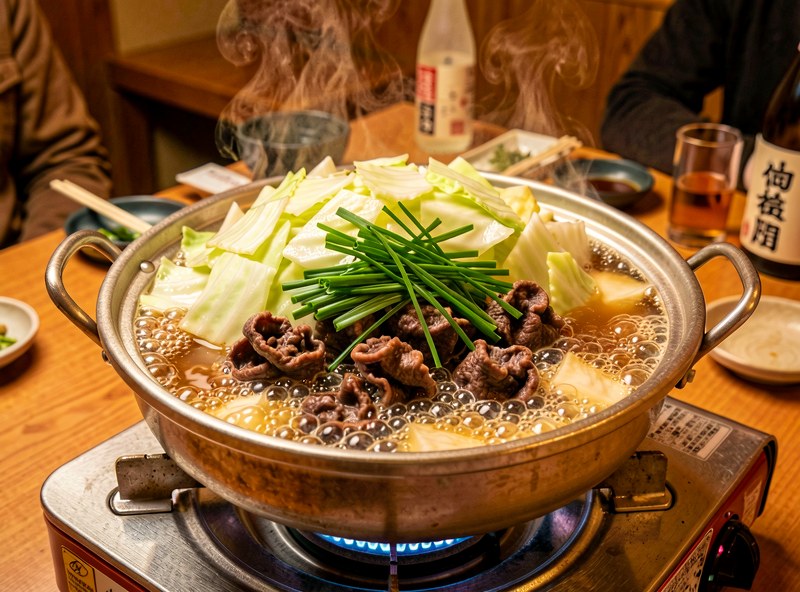
Distance Tenjin (天神) downtown · about 55 min by car
Signature dishes Motsunabe, shime (a noodle or rice finish)
A local hot pot of beef offal loaded with garlic chives and cabbage, simmered in soy or miso broth. Many places require ordering from two servings, so it's great with company. A lively downtown district perfect for combining shopping and a meal.
🐔 Mizutaki specialty restaurant (chicken hot pot)
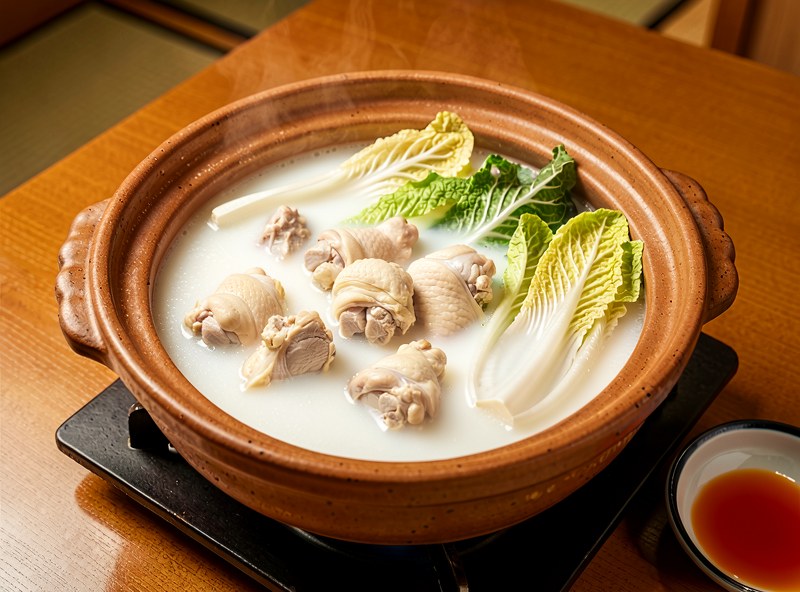
Distance Downtown specialty restaurants · about 50 min by car
Signature dishes Mizutaki, ponzu sauce
The rich white broth from long-simmered chicken resembles Korean chicken soup. Taste the broth with just a touch of salt, then dip the chicken and vegetables in ponzu. Easy on the stomach, it's perfect as a recovery meal after the round.
A bowl of ramen or udon is 600–1,000 yen, a motsunabe or mizutaki hot pot is 1,500–2,500 yen per person, and a yatai runs around 2,000–3,000 yen per person with two or three small dishes and a drink. Mentaiko (spicy cod roe) in vacuum-sealed packs, bought at the airport or station, is popular as a souvenir too. Be sure to carry cash for yatai and small ramen shops.
Motsunabe and mizutaki specialty restaurants and famous yakitori shops can have long evening lines. Ask the hotel front desk or use the Google Maps reservation button to be seated without waiting. Just decide your party size and time in advance. On the outskirts (Asakura), empty taxis are scarce, so call one ahead using the GO / DiDi app from chapter 18.
How to enter, order, and pay at a Japanese restaurant
Japanese restaurants flow a little differently from Korean ones. In particular, once you understand a ramen shop's ticket machine (食券機, shokenki) and the "don't call staff over to your seat" culture, you'll be smooth anywhere.
① Ramen shops with a ticket machine (食券機) — the most common style
- Pay first at the ticket vending machine by the entranceMost ramen shops have a vending machine with photos next to the entrance. Many machines have an "ENGLISH / language" button in the corner of the screen to switch to English or Korean.
- Press the menu button and insert moneyChoose the ramen you want plus toppings (chashu, egg, noodle refill, etc.). Inserting a 1,000-yen note is safest — some machines don't take 5,000 or 10,000-yen notes.
- Take your ticket and collect any changeThe ticket comes out of a slot. Don't forget your change either.
- Sit down and hand the ticket to the staffSit at the seat you're shown and hand your ticket to the staff — that's it. If they ask about noodle firmness, answering "futsū (regular)" is a safe bet.
- Water and hand towels are self-serviceWater is usually self-service (next to your seat or from a jug). When you're done, you can just leave with no further payment. If you want more noodles, say "kaedama kudasai."
Sit down, look at the menu, and to call a staff member, raise your hand and say "sumimasen (excuse me)." After the meal, at many places you don't pay at your seat — you take your receipt or slip to the register (reji) at the exit and pay there. Check whether cards are accepted by the card-company stickers at the entrance.
① With ramen, slurping the noodles audibly is actually the natural and tasty way to enjoy them. ② Japan has no tipping culture — just pay the listed amount. ③ Yatai and small shops often take cash only, so keep plenty of 1,000-yen notes.
A word in the local language — at the restaurant
These few phrases keep things flowing smoothly from entering to paying. Press the speaker button to hear the pronunciation.
Prices, opening hours, and menus can change depending on the establishment. Popular shops sometimes close on regular days off or early when ingredients run out, so we recommend checking the opening hours on Google Maps before visiting. Distances and times on the map are approximate.