The Asakura (朝倉 / Asakura) Course is Century's back nine. It's the nine that most strongly carries Century's "flowers, trees, and water" character, with natural forest, ponds, and creeks woven into every hole, demanding both distance and precision. In this chapter, we walk through every hole of Asakura alongside the official hole maps, point by point, at a Thai golfer's eye level.
The Asakura Course at a glance
Asakura is a par 36 nine measuring about 3,284 yards from the back tees. Mountainside waterfalls, ponds, and creeks divide the fairways, and on each hole trees such as camellia, magnolia, and zelkova create the name and the scenery. The greens are laid out two per hole, left and right (BENT1 left / BENT2 right), so the distance and attack change depending on the green in use that day.
| Course name | Asakura Course (朝倉コース / formerly Chikushino) |
|---|---|
| Par / distance | PAR 36 · Back 3,284Y / Regular 3,030Y / Ladies 2,518Y |
| Highlight | A strategic nine blending natural forest, ponds, and creeks. Two-green system, left and right |
| Toughest stretch | No.3 Tsubaki (dogleg-left middle) · No.6 Haru no Umi (creek + pond) |
| Longest hole | No.9 Saraba Tomo yo — Back 595Y par 5 (the longest on the course) |
Century has a 20-hole layout, rare in Japan. Asakura, too, has beyond its regular nine an extra practice hole (栄光, Eikō) and a spare short hole (瀧の沢, Taki no Sawa), and the club chooses which holes to use to suit the day's conditions. So the hole order and numbers may differ slightly depending on when you visit. The below follows the official hole-map order.
No.1 — 未来 (Mirai) · FUTURE
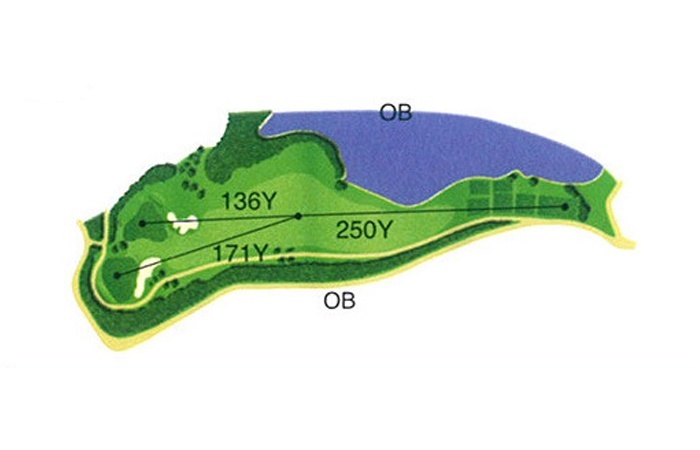
A flat middle hole played out along a large natural pond. The fairway is wide, but the pond jutting in front of the tee gives an odd sense of pressure. Avoid the pond on the right and aim for the left-to-center fairway to make your second shot easier. From the teeing ground, the view of trees reflected in the lake and birds at play is lovely — a beautiful opening hole that may stop your hand for a moment.
No.2 — 瀧の沢 (Taki no Sawa)
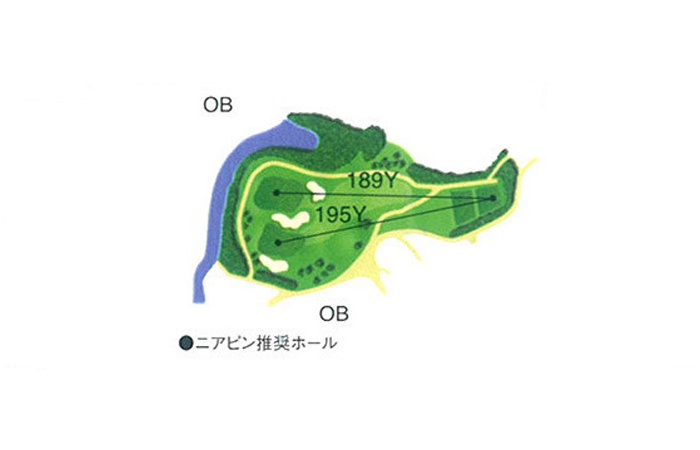
A beautiful downhill par 3 surrounded by natural forest and a pond. The large shii tree (シイノキ, chinquapin oak) standing between the tee and the left green is both this hole's landmark and its obstacle. Being too conscious of getting the ball up easily leads to mistakes, so it's safer to dial in the distance with your usual swing. In early summer the white flowers of the kousa dogwood (yamaboshi), and in autumn the scent of fragrant olive, wrap around the hole.
No.3 — 椿 (Tsubaki) · TSUBAKI
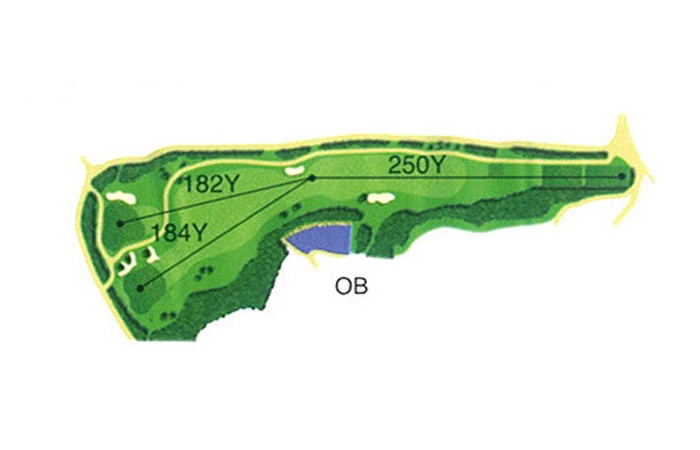
One of the toughest holes at Asakura. It's a flat middle hole curving slightly left, but the large oak in the left corner makes it hard to reach the green on your second shot if your tee shot wavers. With camellia, metal-bark trees, cedar, and cypress lined up in an in-forest course feel, prioritize landing the fairway over greed on your tee shot. If the distance is too long to reach the green in one go, it's wiser to lay up and protect par with an accurate wedge.
No.4 — 迎春花 (Kobushi) · KOBUSHI
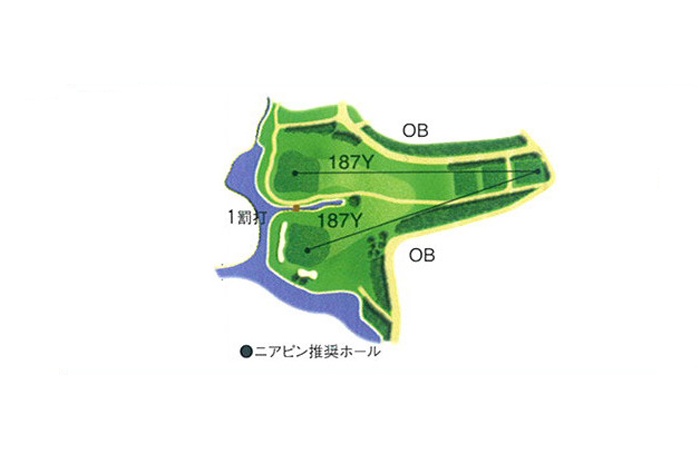
The distance is relatively short for a downhill par 3, but a pond juts right up beside the green, so an accurate shot is needed. Mind your trajectory so the ball doesn't hit the large magnolia (kobushi) rising in the center in front of the green. Behind the green a pond spreads wide, with trees beautifully reflected in the water, and the teeing ground surrounded by azalea clusters is like a hole built inside a garden. Don't let your guard down just because it's short — aiming for the center of the green is the textbook play.
No.5 — 運命 (Unmei) · DESTINY
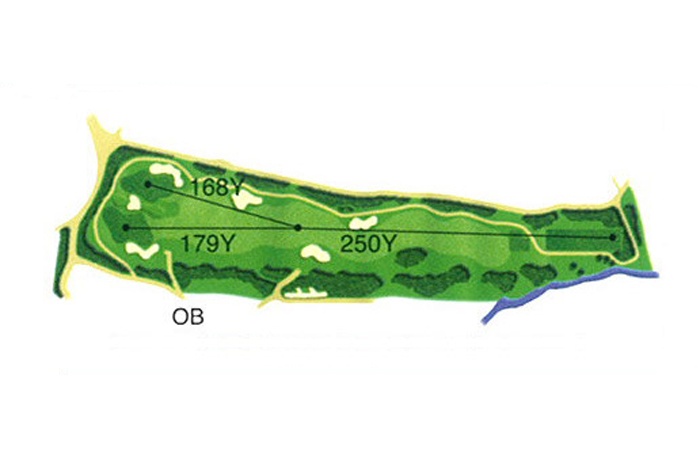
A straight, flat straightaway middle hole. It's one of the five holes on the course with a wide teeing ground (about 900 m²), a refreshing hole where you can send your tee shot as far as you like. The crack of your strike echoes off the large oaks ringing the teeing ground, lifting your spirits. In autumn the foliage of the American sweetgum (amerika-fuu) is beautiful enough to dazzle the eye.
No.6 — 春の海 (Haru no Umi) · SPRING LAKE
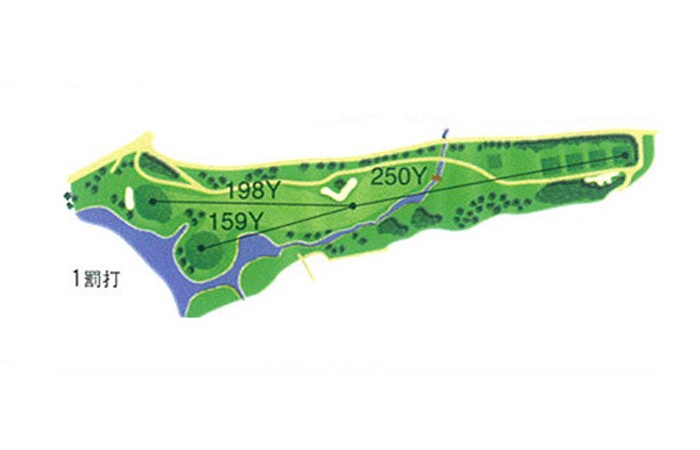
Century's dramatic signature hole. A creek running lengthwise and crosswise and the pond surrounding the green put great pressure on the player. In particular, when using the left green, seen from the 250-yard point the green looks as if it's floating on the pond. It's a stage where pros battling for victory in big tournaments unfold dramatic stories — and the trees, centered on pine, evoke a Japanese-garden beauty. For the average golfer, sending the second shot to the center of the green / the safe side rather than directly at the pin, avoiding the water, is the way to protect your score.
The creek and pond almost entirely surround the green, so a forced attack at the pin tends to cost not one stroke but two or three. If the distance is awkward, laying up and then making a short approach to reach the green safely gives a better result.
No.7 — 花水木 (Hanamizuki) · HANAMIZUKI
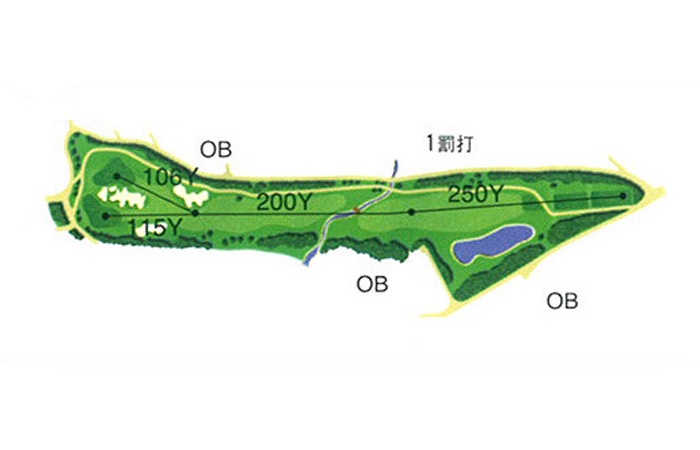
A gentle uphill long hole (par 5). You'll need to carefully calculate the distance to carry the creek cutting diagonally across the fairway from the left. Both the left and right greens have guard bunkers waiting, and the greens have large undulation, so going long is forbidden — it's best to attack short, from the front. With the maples and zelkovas by the pond on the left and flowers blooming through the seasons, it's a bright, colorful hole.
No.8 — 幸運 (Kōun) · GOOD LUCK
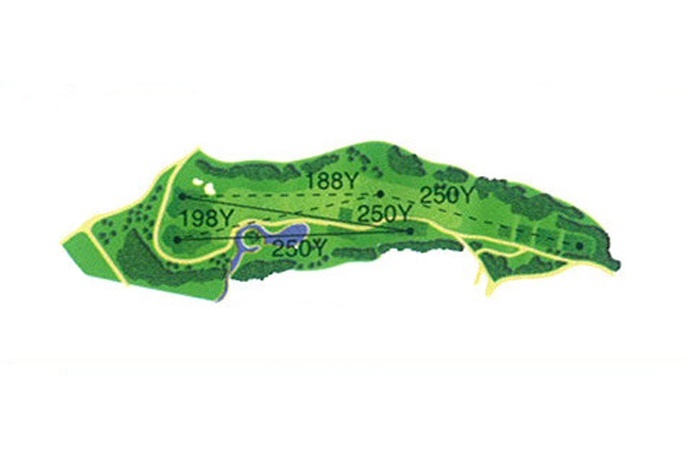
Together with mountain cherries, a hole with two faces — a middle hole and a short hole. Depending on the tee position, it's used as a long par 3 (Back 250Y) or as a middle hole. The "nakajima (中島, island) garden" floating in the gourd-shaped pond on the left, with its stones set in the water, is a landmark. The fairway is truly wide, so standing at your second-shot point the inside of the green looks narrow, but it's actually fine. In autumn the surrounding metasequoia foliage is beautiful. When set up as a long par 3, the distance is demanding, so take a generous extra club.
No.9 — さらば友よ (Saraba Tomo yo) · GOODBY FELLOW
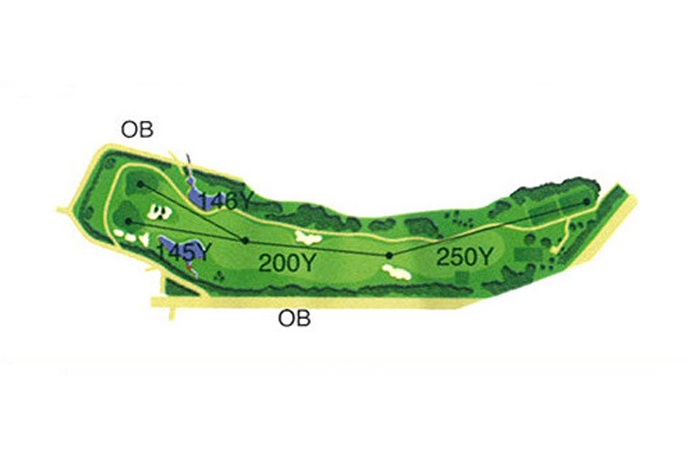
The final long hole, curving gently to the right, and the longest on the course at 595 yards, par 5. The two ponds jutting in front of the green and the large bunker beneath the central zelkova keep you from easing your tension to the very end. Rather than forcing the green in two, we recommend the strategy of laying up short of the ponds and then putting the third shot on safely. This final hole, decorated with zelkova — a representative Japanese deciduous tree — is spectacular with spring's fresh greenery and autumn's colors, and the great azalea clusters surrounding the green leave you thinking, "I want to come back to this course."
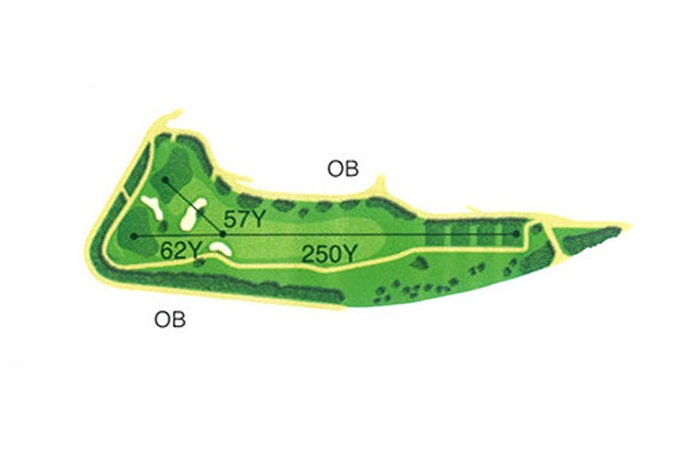
Beyond its regular nine, Asakura has additional practice holes. The flagship is 栄光 (GLORY, Eikō) — a short downhill par 4 (Back 312Y) where, if you take it on carelessly because it's short, you can get caught in a deep bunker and collapse badly. In early spring, before the other trees awaken, the pure-white magnolia (kobushi) flowers bloom, heralding spring first. Depending on the day's course setup, you may end up playing this hole.
Conquering Asakura — the key points
- Two-green system — check the day's green in use with the cart navigation/caddie first.
- No.1, 2, 4, 6, and 9 have water (ponds, creeks) directly in play — aim for the center of the green over the pin.
- No.3 Tsubaki: prioritize landing the fairway above all — a wavering tee shot leads to a big number.
- No.6 Haru no Umi: no forced attacks — a layup is your best score.
- No.7 and 9 par 5s: don't get greedy, go three-on — the greens have large undulation, so front is safer than long.
- When No.8 is set up as a long par 3, take a generous extra club — coming up short is the most common mistake.
Asakura is a nine where scores are decided less by distance than by how you avoid the water. On holes where water is visible, just sticking to "the center of the safe-side green" can prevent a double bogey. With a caddie, actively ask about the line, the wind, and the green in use.
Hole numbers, distances, and handicaps may vary with the day's course setup (greens, tees, hole composition in use) and club circumstances. Distances and yardages are per the official hole maps; we recommend confirming the day's figures once more on the cart navigation and scorecard before your round. Hole-map images source: Fukuoka Century Golf Club official website (fcgc.biz).