Japan is rapidly shedding its old image as a "cash-only country." In central Fukuoka, a single card can handle almost every payment. But at golf-club clubhouses, small restaurants, and roadside shops out in the countryside, there are still times when cash is required. Knowing in advance how Japan's money culture differs from Thailand's means you won't be caught off guard when it's time to settle up.
Where do I exchange yen?
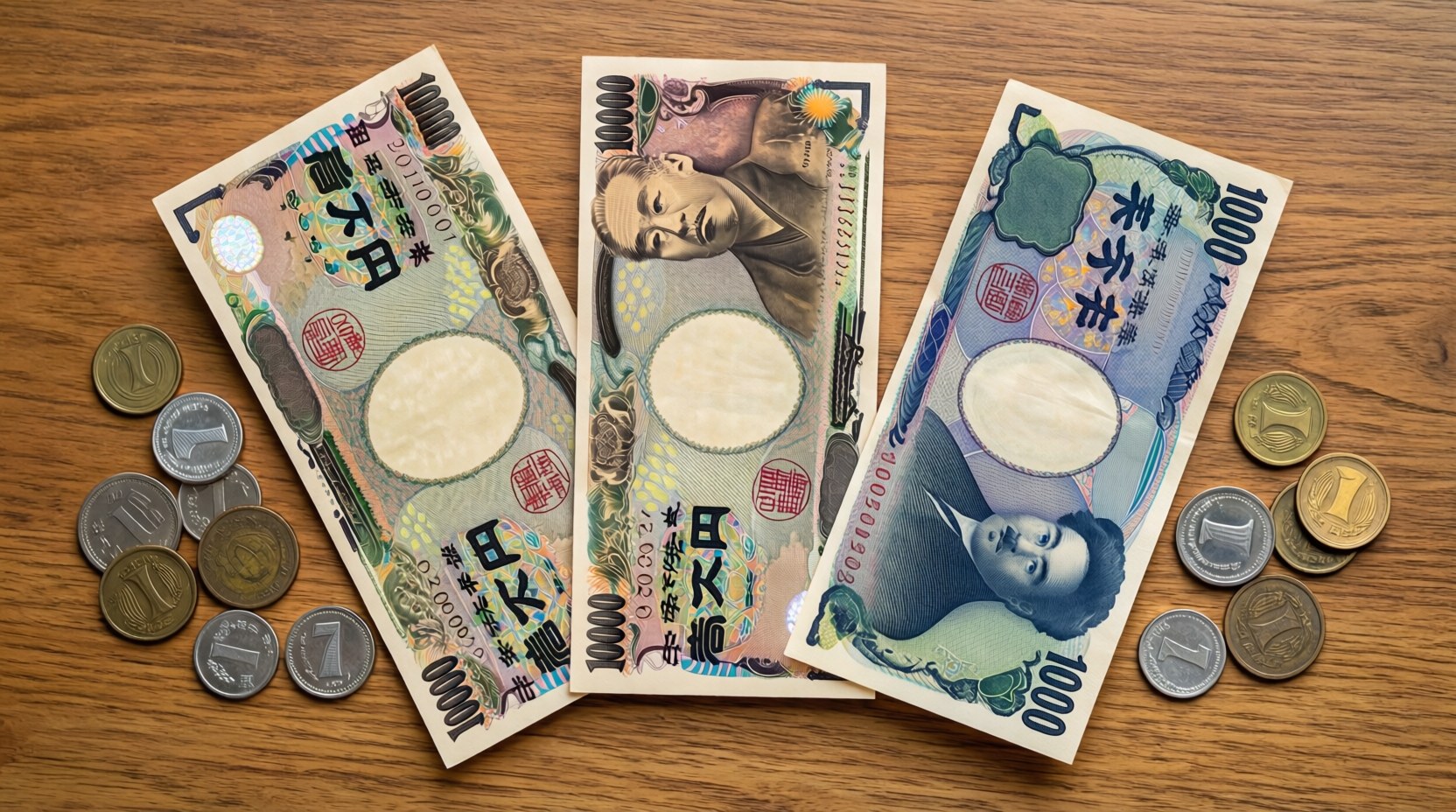
As of 2026, the exchange rate between the Thai baht (THB) and the Japanese yen (JPY) hovers around 1 baht ≒ 4.9 yen (10,000 yen ≒ about 2,000 baht). Rates change daily, so check once before you leave. There are three main ways to exchange money.
| (1) Exchange in Thailand | Private exchange shops such as Super Rich in Bangkok's Pratunam offer relatively good rates. Changing about 30,000–50,000 yen before you depart lets you use it right away for transport, meals, and vending machines on arrival — the most reassuring option. |
|---|---|
| (2) Fukuoka Airport / city | You can also exchange baht to yen at Fukuoka Airport's international terminal and at city exchange counters, but the rates are less favorable than at private shops, and baht handling may be limited. Think of this as an emergency option only. |
| (3) ATM withdrawal in Japan | If you run short locally, you can withdraw yen directly with an overseas card at 7-Eleven (Seven Bank) or post office (Japan Post Bank) ATMs. They run 24 hours with multilingual support, making them the most dependable choice (see the tip below). |
The Seven Bank ATMs in 7-Elevens across Japan can switch to English and allow 24-hour yen withdrawals with overseas-issued cards (Visa, Mastercard, UnionPay, etc.). Making one withdrawal right after arriving at Fukuoka Airport is reassuring. Since your card issuer adds an overseas fee per withdrawal, it's better to withdraw a generous amount at once rather than making frequent small withdrawals.
Understanding Japan's dual "cash + card" culture
As of 2026, Japan's cashless payment share has risen to about 40%. In a city like Fukuoka, convenience stores, department stores, chain restaurants, and drugstores virtually all accept cards and contactless (tap) payments. Still, Japan retains a dual structure: "cards in the cities, cash in the countryside and at small businesses." Keep these two things in mind.
💳 Where cards / tap payments work well
Convenience stores (7-Eleven, Lawson, FamilyMart), large supermarkets and department stores, chain restaurants and cafés, drugstores, hotels, and JR / subway ticket gates. Visa/Mastercard contactless (📶 symbol), Apple Pay, and Google Pay work in most of these.
💴 Where cash may be needed
Small family-run restaurants, izakaya, and ramen shops; roadside stores in the countryside; some taxis; shrines and temples; and certain facilities at some golf courses. If you see a "cash only (現金のみ)" sign, cards won't work.
Even on a city-focused itinerary, we recommend always keeping 20,000–30,000 yen in cash per person in your wallet. This is in case of a "the card doesn't work" moment with golf-course taxis, caddies, the clubhouse restaurant, or small shops. Remember that, unlike Thailand, Japan is not an environment where you can pay by QR (PromptPay) anywhere.
How do I settle up at the golf course?
Fukuoka Century Golf Club is a traditional course operating carts and caddies, and after your round you settle the bill at the clubhouse front desk (精算, seisan). The green fee, caddie fee, cart fee, food and drinks, and locker fee are all settled at once.
| Payment methods | Century GC accepts both credit cards and cash (Visa, Mastercard, JCB, etc.). Use a card as your default, but bring cash just in case. |
|---|---|
| When you pay | You settle all at once when you leave, after finishing your round. There is no separate payment partway through the course. |
| Caddie / cart | These are included in the billed fees, so no separate cash tip is needed (there is no tipping culture in Japan). |
| Note at booking | Fees and accepted payment methods may vary by season and booking channel, so confirm once more via your booking confirmation or your TourExpert representative. |
Unlike Thailand or the West, in Japan it is polite not to tip caddies or restaurant staff. Offer a tip and the staff will be flustered and try to return it. Just pay the amount on the bill, nothing more.
Make active use of coins
Coins are used a lot in Japan. 100-yen and 500-yen coins come in handy for vending-machine drinks, coin lockers, golf-course showers, and small-shop payments. It helps to set aside the coins you get as change. A dedicated coin purse will speed you up at the register.
Connectivity — get online the moment you arrive
Navigation, translation, hailing taxis, contacting the golf course — almost everything on a trip to Japan starts with data. Set up before you leave so you're connected the instant you land in Fukuoka. There are three ways to do it.
📱 eSIM Recommended
A virtual SIM you buy via an app or website before departure and install via QR code. With no device to rent or return, it's the simplest option. Just activate it after you step off the plane and you're done. Ideal for solo travelers, with 10–20 GB typically running about $15–25.
📶 Pocket Wi-Fi
A portable hotspot that connects multiple devices at once. Handy if you're traveling as a group or use a lot of data. The downside is you must carry the device everywhere and keep it charged and return it. About $50–80 for a 10-day rental.
🌐 Roaming
The easiest method — just switch on the Thai number you already use. However, even "unlimited" plans often throttle speed after a set amount and tend to be expensive. Not recommended unless your trip is short or you use little data.
If you're traveling alone or as a pair, an eSIM is the cleanest. Fukuoka Century GC is in the mountainous Asakura area, so choosing a data plan based on the docomo or au network keeps you stable even out in the hills. If a group of 3–4 golfers travels together, sharing a single pocket Wi-Fi can be more cost-effective. For mostly maps and translation, 5–10 GB is plenty.
How to set up an eSIM
- Buy before departureBuying an eSIM in Thailand in advance gets you a QR code and an instructions email. Setup is more relaxed than doing it on arrival.
- Install via QRGo to Settings → Mobile/Cellular → Add eSIM and scan the QR you received to install the line (don't turn it on yet).
- Activate after arriving in FukuokaConnect to the airport's free Wi-Fi, turn on the eSIM line, and switch "Allow Data Roaming" to ON. Keep your existing Thai number for calls and texts only, and use the eSIM for data.
- Confirm the connectionOpen a map app and check that it picks up your location — that's it. If it doesn't work, try toggling airplane mode off and on.
(1) eSIMs only work on an eSIM-capable device (most recent iPhones and Galaxy phones support it). For older phones, use a physical SIM or pocket Wi-Fi.
(2) Turn off data roaming on your existing Thai SIM. If it's on, you may be charged separate, expensive roaming fees.
(3) QR installation is usually single-use. Take a screenshot of the QR image and keep it before installing.
Exchange rates, connectivity fees, and where payments are accepted can vary by timing and merchant. Amounts here are rough guidance as of 2026; for actual transactions, please check the latest notices from your card issuer, exchange shop, or carrier.