Almost every course in Vietnam is built around using a cart (buggy), and the cart is included in your package. For pace and heat, walking is not a standard option at most courses, so think of the cart as a given rather than a choice. It's usually two players per cart, and the caddie typically drives. The cart is what keeps pace in the heat, so you only need the basic rules and a little safety sense.
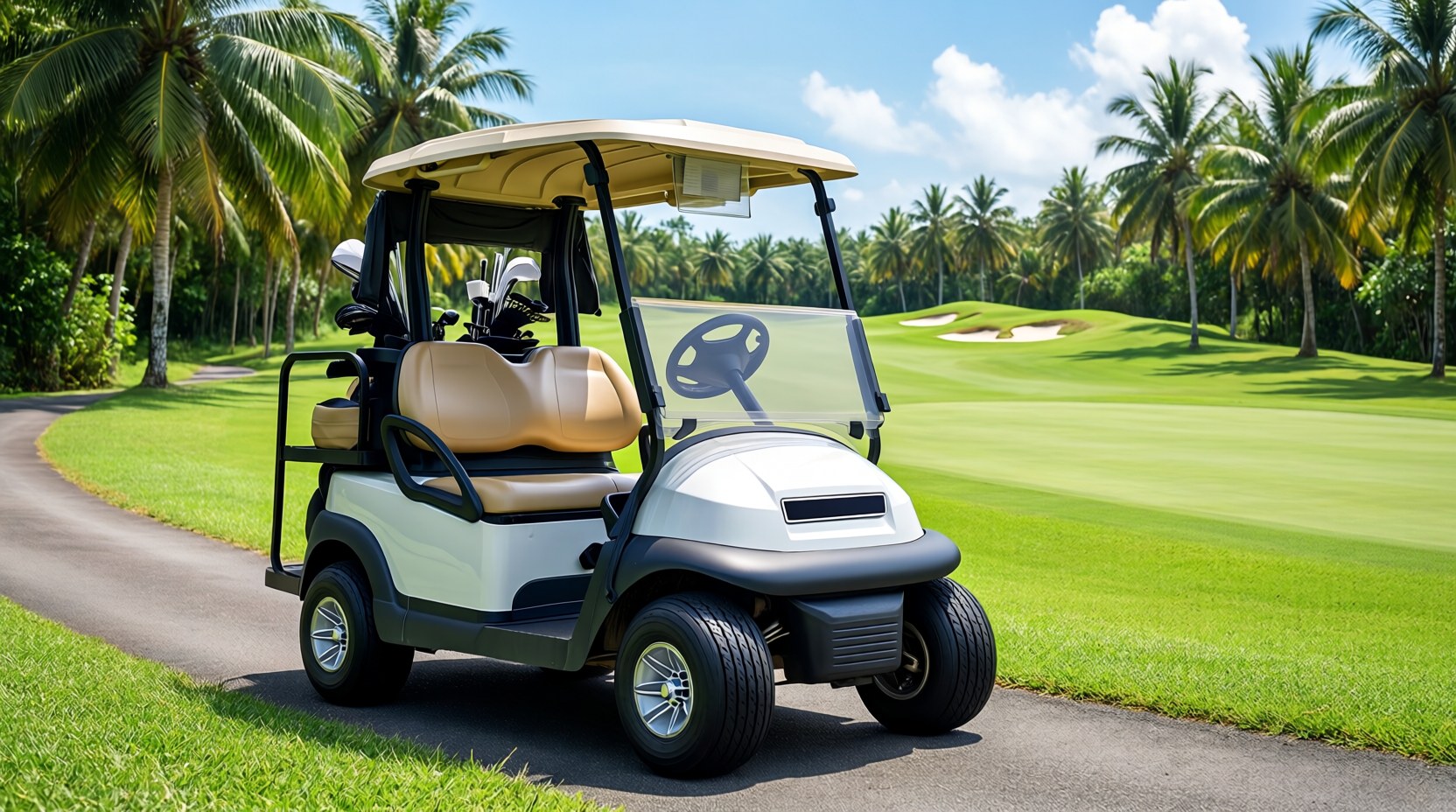
Cart rules change with course condition and the day's policy. After rain or during turf protection you'll be told to stay on cart paths only; otherwise the ‘90-degree rule’ applies — drive along the path, then turn onto the fairway at a right angle to your ball and take the shortest line. Your caddie drives to the day's rule, so just follow along.
The GPS screen by the steering shows the hole layout, distances to the front/middle/back of the green and hazard positions. Some carts even let you order drinks or check your tab on screen. The accelerator and brake work like a car, with a forward/reverse lever beside the seat. If you drive, tap the brake before setting off to feel the stopping power.
GPS usually shows distance to the middle of the green by default. With a front pin, play a touch less; with a back pin, a touch more. Vietnamese courses mix meters and yards, so check the unit first. The caddie knows the exact pin best, so combine the GPS number with her advice and club choice gets easy.
Vietnam's coastal and mountain courses have plenty of slopes. Go slow downhill and watch for slipping on wet grass or early-morning dew. Keep hands and feet inside while moving, and hold the grab bar on starts and stops. When parking on an incline, point the wheels uphill and set the parking brake.
The green is the most delicate area. Park the cart well clear of greens, teeing grounds and bunkers, on the side toward the next hole. Your caddie usually positions it well, but if you drive, stay outside any ropes or stakes around the green. Once you've holed out, clear the green promptly for the group behind.
- BoardBoard the assigned cart at the starter tent; note where bags, umbrella and cooler are.
- DriveMove per the day's rule (path-only/90-degree). The caddie usually drives you to your next shot.
- StopStop safely at your ball or near the green; set the brake firmly on slopes.
- Past the greenAfter putting, move the cart toward the next hole — never onto the green or inside ropes.
Carts usually carry an umbrella and a cooler with water and iced towels. Use the cart's shade and a cold towel at midday, and when a short Southeast-Asian squall rolls through, groups often shelter by the cart path and resume once it passes. Follow your caddie's lead.
| Default rule | Usually 90-degree; path-only after rain or for turf protection |
|---|---|
| Green/tee/bunker | No entry — park well clear |
| Ropes/stakes | Stay outside any marked lines |
| Speed | Slow on downhills/wet grass, ease into corners |
Sharing a cart means syncing with your partner. Grab two or three clubs in advance so you can move straight to your next shot, and park safely while your partner plays. When a player in another group is over the ball, stop the cart and keep movement and noise down. Even engine hum and rolling can break concentration, so pausing just before a shot is good manners.
- Check where bags, umbrella and cooler are before boarding
- Tap the brake before setting off if you're driving
- Keep hands and feet inside; hold the grab bar while moving
- On a slope, set the parking brake and point wheels uphill
- Never drive onto greens, tees, bunkers or inside ropes
- When getting out, don't leave phone, rangefinder or sunglasses behind
Whether you can drive yourself, and any buggy insurance, varies by course. If you're not used to it, let the caddie drive — they know the routing and hazards best, and it's faster and safer.